Monday, February 14, 2022

Ischaemic Colitis - Symptoms & Treatments


A former physician of the National University Hospital in Singapore, Chua Tee Lian is the director and clinic manager of C & K Family Clinic. Chua Tee Lian also provided family medicine services at the Frankel Clinic and the Liang Clinic. Additionally, he conducted academic research on ischaemic colitis.

Ischaemic colitis represents an inflammation of the large intestine. Ischaemic colitis happens if the arteries are blocked and cannot distribute blood to the colon. The arteries can be blocked for various reasons. For example, the fat buildup can deposit on the artery and reduce blood flow or because of high blood pressure and other heart diseases. A couple of medicines can lead to ischaemic colitis if used in excess, such as opioids or hormone medications.

Ischaemic colitis typically affects people over 60 years old and can be diagnosed through CT scans, angiograms, or colonoscopies. Common symptoms include diarrhea, bloody poop, and maroon blood. Ischaemic colitis can be treated with antibiotics, as they can stop inflammation and relieve the symptoms. Doctors can also suggest intravenous fluids to keep a patient hydrated or treatments for heart conditions so that the arteries can function properly.

Friday, January 28, 2022

The Path to Becoming a Doctor in Singapore


A veteran medical professional with over 30 years of experience, Singapore-based Dr. Chua Tee Lian works as a family physician, previously serving with the Frankel Clinic and the Liang Clinic. Dr. Chua Tee Lian is now the director and clinic manager of C & K Family Clinic in Singapore. Before he could care for patients, he had to go through a rigorous process to become a medical doctor in his country.

Ranking among the elite when it comes to quality of life, it is no wonder Singapore has such a difficult journey to becoming a medical doctor. The country takes the healthcare of its citizens very seriously, and ensures that medical doctors are fully equipped to do their jobs.

In Singapore, there are a number of requirements along the road to becoming a doctor. Fluency in both English and Malay is needed, and certification will be required. It is recommended that the student choose to attend medical school in Singapore itself, and there are three different options.

Two of the medical schools in Singapore, Yong Loo Lin School of Medicine at the National University of Singapore, and Lee Kong Chian School of Medicine at Nanyang Technological University, only require a high school transcript with certain courses completed. The program is five years in length and includes both a bachelor’s of medicine and science.

For students interested in the Duke-NUS Medical School, the entrance requirements are very different. Applicants must already have a bachelor’s degree and have passed the MCATs. This program is internationally recognized, and takes only three years compared to five.

Once a student has completed their MD training, they must apply with the Singapore Medical Council, complete a housemanship (residency), and submit all of their official credentials. Once approved by the council, they can then start applying for work as a medical doctor in Singapore.

Monday, November 8, 2021

Common Health Screening Tests


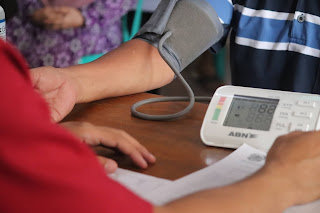
Health screening consists of doctors' medical tests that detect diseases and health conditions before manifesting as signs or symptoms. Screenings aid in early problem detection, when they may be easier to treat. These tests also minimize unclear, ambiguous, or confusing results. While screening tests are not always accurate, it is generally more valuable having them at the appropriate times, under a healthcare provider's recommendation, than not having them at all.

Screening tests are not diagnostic. Instead, they identify a population section that requires additional testing to determine disease presence or absence. Depending on a person's age, gender, and medical history, screening can detect medical conditions including diabetes, certain types of cancer, high blood pressure, and mental health conditions such as depression. Individuals should consult their healthcare providers regarding the appropriate screening timings and frequency.

Among the tests is a lipid panel test which is a simple blood procedure that determines cholesterol levels. Cholesterol is a soft, sticky substance that exists within the body. Total cholesterol comprises good (HDL) cholesterol, bad (LDL) cholesterol, and triglycerides, a particular type of fat. A lipid panel test provides individual results for good and bad cholesterol and triglycerides.

Pap smears are cell samples taken from a woman's cervix to look for cellular changes that may indicate cervical cancer. The test is important for sexually active women under 65 years. Notably, an 'abnormal' Pap smear does not necessarily suggest that a person has cervical cancer. Some organizations also recommend HPV (human papillomavirus) screening during the Pap smear in specific populations.

A fasting blood glucose test screens for diabetes. The United States Preventive Services Task Force (USPSTF ) recommends screening for abnormal blood glucose and type 2 diabetes in adults over 45 years and overweight or obese people over 40 years. Additionally, if the results are normal, repeating these tests should happen every three years. Individuals at higher risk, such as those with diabetes, may take the screening earlier or more frequently.

The prostate-specific antigen (PSA) test is a blood test that detects its presence in the blood. Antigens are any substances that cause the immune system to react. Prostate cancer's presence elevates PSA. However, other prostate conditions, such as benign prostatic hyperplasia (BPH), which is noncancerous swelling of the prostate, can also elevate PSA.

Mammography tests for breast cancer mostly in women. Beginning at ages 45 and 50, this test is done together with a clinical breast exam. A doctor uses specialized medical imaging where a low-dose x-ray system checks inside the breasts. The x-ray exposes a patient to a low dose of ionizing radiation to produce the body's internal images. Currently, there are three mammography types, namely computer-aided detection, digital mammography, and breast tomosynthesis. The USPSTF recommends taking the test every one year to two years after age 50.

Dermatologists frequently screen for skin cancer. This is especially important if one has fair skin and is prone to sun damage or has a skin cancer history in their family. During a skin exam, the doctor looks for pigmented areas appearing abnormal in size, shape, color, texture, moles, and birthmarks to identify any that require further examination.

Many organizations, including the USPSTF, recommend screening for colon cancer or polyps from age 45. A long, flexible tube called a colonoscope is inserted into the rectum. A doctor sees the colon's interior using a tiny video camera at the tip of the tube. Colonoscopy detects abnormalities in the colon and rectum.

Wednesday, October 27, 2021

The Role and Types of Health Screening

Health screenings are medical tests performed to check for health conditions and diseases before they show any symptoms. The goal of screening is early disease detection and surveillance to reduce the risk of illness. When a disease is detected early, treatment is easier and more effective. Health screening tests are not part of diagnostic testing. Instead, they are used to identify a population subset that should receive additional testing to confirm or rule out the presence of disease.

If you get a negative result (normal) after a screening test, it means your level of risk of contracting the condition or illness you were screened for is low. This, however, does not mean that you will or can never develop that particular condition in the future, only that you are currently at low risk. Getting a positive result (higher-risk result) means you could have the condition you were being tested for. A positive result means you will be subjected to further tests (diagnostic tests) to confirm (or rule out) the condition. If approved, you will be offered advice, treatment, and support.

Diagnostic tests are to find out what could be the cause of specific symptoms. On the other hand, screening is done in populations who are not ill and with no signs. Screenings are essential as they help find health problems early on, and getting the recommended screenings is a good health strategy for long-term wellbeing. Several critical tests should be routinely performed to rule out disease.

All adults, according to the American Diabetes Association, should be screened for prediabetes or diabetes starting at the age of 45 years. And it does not matter how much the individual weighs. It is particularly critical to be screened if you are obese or overweight or predisposed to one or more other diabetes risk factors.

The Pap test or pap smear is a necessary test for sexually active women below age 65. Pap smears are cell samples taken from the woman’s cervix and can find cancer at its very early stage, often when it has no symptoms. However, if the results are abnormal (positive), that doesn’t necessarily mean cervical cancer is present. Therefore, further diagnostic tests become necessary.

A cholesterol screening test is performed at the clinic through a blood test. Individuals with high cholesterol measurements are at a higher risk of getting the cardiovascular disease than people with normal cholesterol measurements.

The fecal occult screening checks for the presence of blood in the stool. The test entails observing the stool samples under the microscope. Blood in the stool could be an indication of cancerous growth, a potential sign of colorectal cancer.

When to get screened and how often may depend on several factors such as your risk factors, age, gender, and health status. In some cases, the testing is part of the routine medical checkup, but the doctor may recommend specific screening tests. Talk with your health provider if you are considering a screening test. That is an opportunity to learn more about the condition, the procedure to be followed, and how the screening might help you. You also get to know what additional diagnostic testing and follow-up may be required if you get positive results.

How Often to Pursue Health Screening

A University of Leicester graduate in medicine, Chua Tee Lian works as a director and family physician at C&K Family Clinic in Singapor...